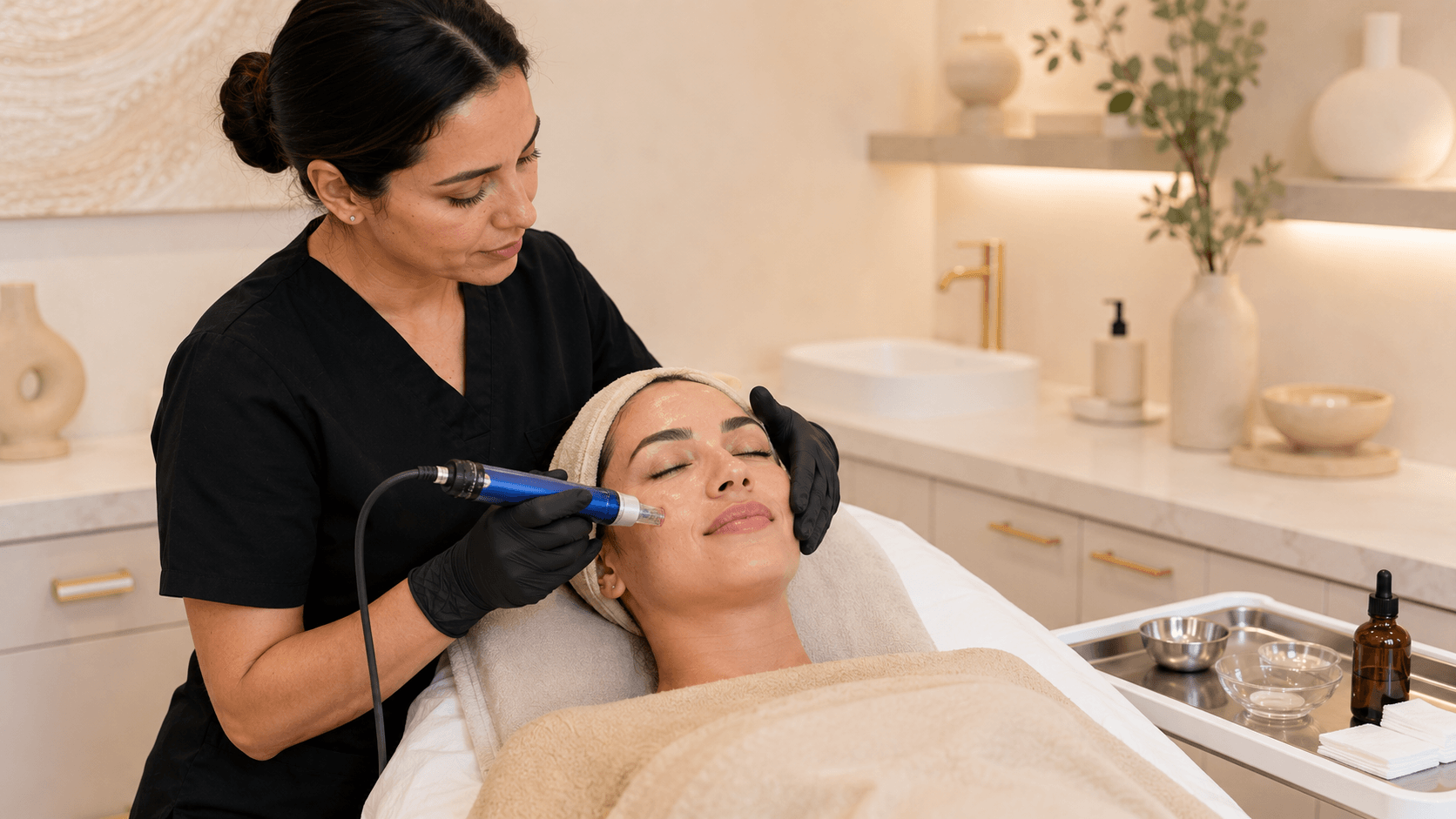
If you’ve recently explored advanced skin treatments like laser resurfacing or microneedling, you may have heard providers mention exosomes. Naturally, the next question becomes: what are exosomes in skin rejuvenation—and why are they being added after procedures?
Exosomes are one of the newest regenerative tools in aesthetic medicine. They’re not fillers. They’re not growth factors in the traditional sense. Instead, they act as powerful cellular messengers that help support healing, reduce inflammation, and enhance collagen remodeling after advanced treatments.
Understanding what are exosomes in skin rejuvenation helps clarify why they’re increasingly paired with procedures designed to stimulate deep skin repair.
Jump To:
- What Are Exosomes in Skin Rejuvenation?
- Why Exosomes Are Used After Advanced Treatments
- How Exosomes Support Healing
- Potential Benefits of Exosomes After Skin Treatments
- Are Exosomes a Replacement for Laser or Microneedling?
- Who May Benefit Most From Exosome Therapy?
- How Are Exosomes Applied?
- Are Exosomes Safe?
- How Long Do Exosome-Enhanced Results Last?
- The Future of Regenerative Aesthetics
- Key Takeaways
- FAQs
TLDR – Quick Guide
- Exosomes are cellular messengers that support tissue repair.
- They help reduce inflammation and accelerate healing.
- Often used after laser or microneedling treatments.
- May enhance collagen production and skin regeneration.
- Work best as an adjunct—not a standalone treatment.
What Are Exosomes in Skin Rejuvenation?
Let’s simplify it.
Exosomes are tiny extracellular vesicles released by stem cells. Think of them as microscopic delivery vehicles carrying:
- Proteins
- Lipids
- Growth factors
- Genetic signaling material
Their job? Communicate with surrounding cells.
When applied to skin after controlled injury (like laser resurfacing), exosomes signal cells to:
- Repair faster
- Reduce inflammation
- Stimulate collagen production
- Enhance tissue regeneration
So when patients ask, what are exosomes in skin rejuvenation, the answer is: they’re advanced biological messengers that help optimize the healing process.
Why Exosomes Are Used After Advanced Treatments
Procedures like:
- CO2 laser resurfacing
- Fractional laser treatments
- Microneedling
- RF microneedling
Work by intentionally creating controlled micro-injuries in the skin.
That injury triggers:
- Inflammation
- Collagen remodeling
- Cellular turnover
Adding exosomes after treatment may enhance this natural process by:
- Accelerating repair
- Reducing redness
- Supporting deeper collagen stimulation
At advanced aesthetic practices like Skin Care Institute in Tulsa, regenerative therapies are often integrated strategically following energy-based procedures to optimize recovery.
How Exosomes Support Healing
Understanding what are exosomes in skin rejuvenation also requires knowing how they influence the inflammatory cascade.
After laser treatment, your body initiates:
- Inflammatory phase
- Proliferation phase
- Remodeling phase
Exosomes may help:
- Shorten the inflammatory phase
- Reduce swelling
- Minimize prolonged redness
- Improve tissue regeneration efficiency
The goal isn’t to eliminate inflammation entirely—some inflammation is necessary. Instead, exosomes help modulate and support balanced healing.
Potential Benefits of Exosomes After Skin Treatments
Patients and providers report potential improvements such as:
- Faster recovery time
- Reduced post-procedure redness
- Enhanced collagen remodeling
- Improved texture and tone
- Stronger overall skin quality
It’s important to note that exosomes amplify what the treatment already initiates—they don’t replace the treatment itself.
Are Exosomes a Replacement for Laser or Microneedling?
No.
Exosomes do not:
- Remove damaged skin
- Resurface texture
- Eliminate deep wrinkles
- Vaporize scar tissue
They are supportive—not corrective.
When patients ask what are exosomes in skin rejuvenation, it’s important to clarify that they enhance healing after procedures that actually create structural change.
Who May Benefit Most From Exosome Therapy?
Exosomes are often recommended for patients undergoing:
- CO2 laser resurfacing
- Advanced fractional resurfacing
- Deep microneedling
- Aggressive collagen induction treatments
They may be particularly helpful for individuals who:
- Want to reduce downtime
- Experience prolonged redness after procedures
- Have slower healing tendencies
- Are treating moderate to advanced texture concerns
You can explore advanced laser and regenerative options through the clinic’s comprehensive aesthetic treatment services, where personalized treatment plans incorporate supportive technologies when appropriate.
How Are Exosomes Applied?
In aesthetic settings, exosomes are typically:
- Applied topically immediately after treatment
- Delivered through microchannels created by microneedling
- Absorbed into freshly treated skin
Because advanced treatments temporarily increase skin permeability, exosomes can penetrate more effectively during this window.
Are Exosomes Safe?
When sourced and administered properly by trained medical professionals, exosome therapies are generally well tolerated.
However:
- Product quality varies
- Not all exosome products are identical
- Proper screening and professional oversight are essential
As with any regenerative therapy, consultation is critical to ensure appropriate use.
How Long Do Exosome-Enhanced Results Last?
The exosomes themselves do not remain in the skin permanently.
Instead, they influence the healing process, which then impacts:
- Collagen remodeling
- Skin thickness
- Texture improvement
Results align with the underlying procedure. For example:
- After CO2 laser, improvements may continue for months as collagen rebuilds.
- Exosomes may help optimize that remodeling phase.
The Future of Regenerative Aesthetics
Exosomes represent a growing shift toward biologically supportive treatments in aesthetics.
Rather than simply removing or tightening tissue, regenerative approaches aim to:
- Enhance natural healing
- Improve cellular communication
- Optimize long-term skin quality
When used appropriately, they may complement advanced resurfacing for more refined results.
Key Takeaways
- What are exosomes in skin rejuvenation? They are cellular messengers that support repair and collagen production.
- Exosomes are used after advanced treatments like lasers and microneedling.
- They may reduce downtime and enhance tissue regeneration.
- They are not standalone resurfacing treatments.
- Professional evaluation ensures safe and effective integration.
Exosomes don’t replace advanced skin treatments—but they may help your skin recover and remodel more efficiently after them.
FAQs
What are exosomes in skin rejuvenation exactly?
Exosomes are microscopic vesicles released by stem cells that carry growth factors and signaling molecules. They help cells communicate and repair tissue. In skin rejuvenation, they support healing after advanced treatments.
Do exosomes make laser results better?
Exosomes may enhance the healing process and collagen remodeling. They do not replace the laser’s corrective action. Instead, they support recovery and tissue regeneration.
Are exosomes the same as PRP?
No, they are different. PRP uses your own platelets, while exosomes are cell-derived signaling vesicles. Both aim to support healing but work through different mechanisms.
Is there downtime with exosome treatment?
Exosomes themselves do not cause downtime. Any recovery is related to the underlying procedure, such as laser or microneedling. They may actually help reduce healing time.
How soon after a procedure are exosomes applied?
They are typically applied immediately after treatment while the skin is more permeable. This enhances absorption and effectiveness. Timing is important for optimal results.