Winter has a way of turning even a reliable skincare routine upside down. One week, your skin feels smooth and comfortable. The next, you’re dealing with flaky patches, rough texture, and foundation that seems determined to highlight every dry spot.
Cold weather, low humidity, and indoor heating can all contribute to moisture loss, making winter skincare particularly challenging.
If you’re searching for a professional solution, you may be wondering whether Diamond Glow Platinum for Dry Skin can help restore a smoother, more refreshed appearance.
At Skin Care Institute, patients can explore Diamond Glow Platinum, a professional facial treatment that incorporates DiamondGlow technology to exfoliate, extract debris, and deliver targeted topical serums.
But here’s the important distinction: Not all dry skin needs exfoliation.
DiamondGlow may improve flaky-looking surface texture when dead skin buildup is contributing to roughness. However, severely irritated or compromised skin may need gentle barrier care before any resurfacing treatment.
Let’s explore how Diamond Glow Platinum for Dry Skin works, when it may help, and how to maintain a smoother complexion throughout winter.
Jump to:
- TLDR – Quick Guide
- Detailed Breakdown
- 1. Why Does Skin Become Dry and Flaky During Winter?
- 2. How Does Diamond Glow Platinum for Dry Skin Work?
- 3. Can DiamondGlow Actually Improve Flaky Winter Texture?
- 4. Who Is a Good Candidate for Diamond Glow Platinum During Winter?
- 5. Diamond Glow Platinum vs. Diamond Glow Signature for Dry Skin
- 6. How Does DiamondGlow Compare With Other Treatments for Dry Skin?
- 7. How Often Should You Get Diamond Glow Platinum for Dry Skin?
- 8. How Can You Maintain Smoother Skin After Diamond Glow Platinum?
- Key Takeaways
- FAQs
TLDR – Quick Guide
- Can it help? Diamond Glow Platinum for Dry Skin may temporarily improve rough, flaky-looking texture caused by surface buildup.
- How it works: DiamondGlow combines mechanical exfoliation, suction-assisted extraction, and topical serum infusion.
- Winter benefits: Appropriate treatment may leave skin looking smoother, brighter, and more refreshed.
- Important limitation: Exfoliation does not automatically repair a damaged skin barrier or resolve chronic dryness.
- Who should be cautious? People with active irritation, cracked skin, eczema flares, or significant sensitivity may need to postpone treatment.
- Maintenance: Gentle cleansing, regular moisturizing, and daily sunscreen help support results.
- Best approach: A skincare professional should assess your skin before recommending treatment intensity or frequency.
Bottom line: DiamondGlow may help remove flaky surface buildup, but healthy-looking winter skin also depends on consistent moisture and barrier protection.
Detailed Breakdown
1. Why Does Skin Become Dry and Flaky During Winter?
Before deciding whether Diamond Glow Platinum for Dry Skin is appropriate, it helps to understand why winter can make skin feel rough.
Cold Air and Low Humidity
Winter air often contains less moisture than warmer, more humid air.
When environmental humidity decreases, skin may lose moisture more easily, contributing to dryness and tightness.
This can make fine lines, rough patches, and surface flakes more noticeable.
Indoor Heating
Heating systems help keep homes comfortable, but they can also create dry indoor environments.
Combined with cold outdoor temperatures, this can leave skin feeling uncomfortable throughout the day.
Hot Showers and Harsh Cleansers
Long, hot showers may feel wonderful during winter, but excessive heat and harsh cleansing can strip away some of the skin’s protective oils.
Without adequate moisturizing, dryness may become more noticeable.
A Compromised Skin Barrier
The skin barrier helps retain moisture and protect against external irritants.
When this protective function is disrupted, skin may become:
- Dry or flaky.
- Tight and uncomfortable.
- Red or irritated.
- Sensitive to skincare products.
- Rough to the touch.
Explore Skin Barrier Repair to understand why restoring moisture and reducing irritation are essential parts of winter skincare.
2. How Does Diamond Glow Platinum for Dry Skin Work?
Diamond Glow Platinum for Dry Skin combines professional skin resurfacing with topical skincare delivery.
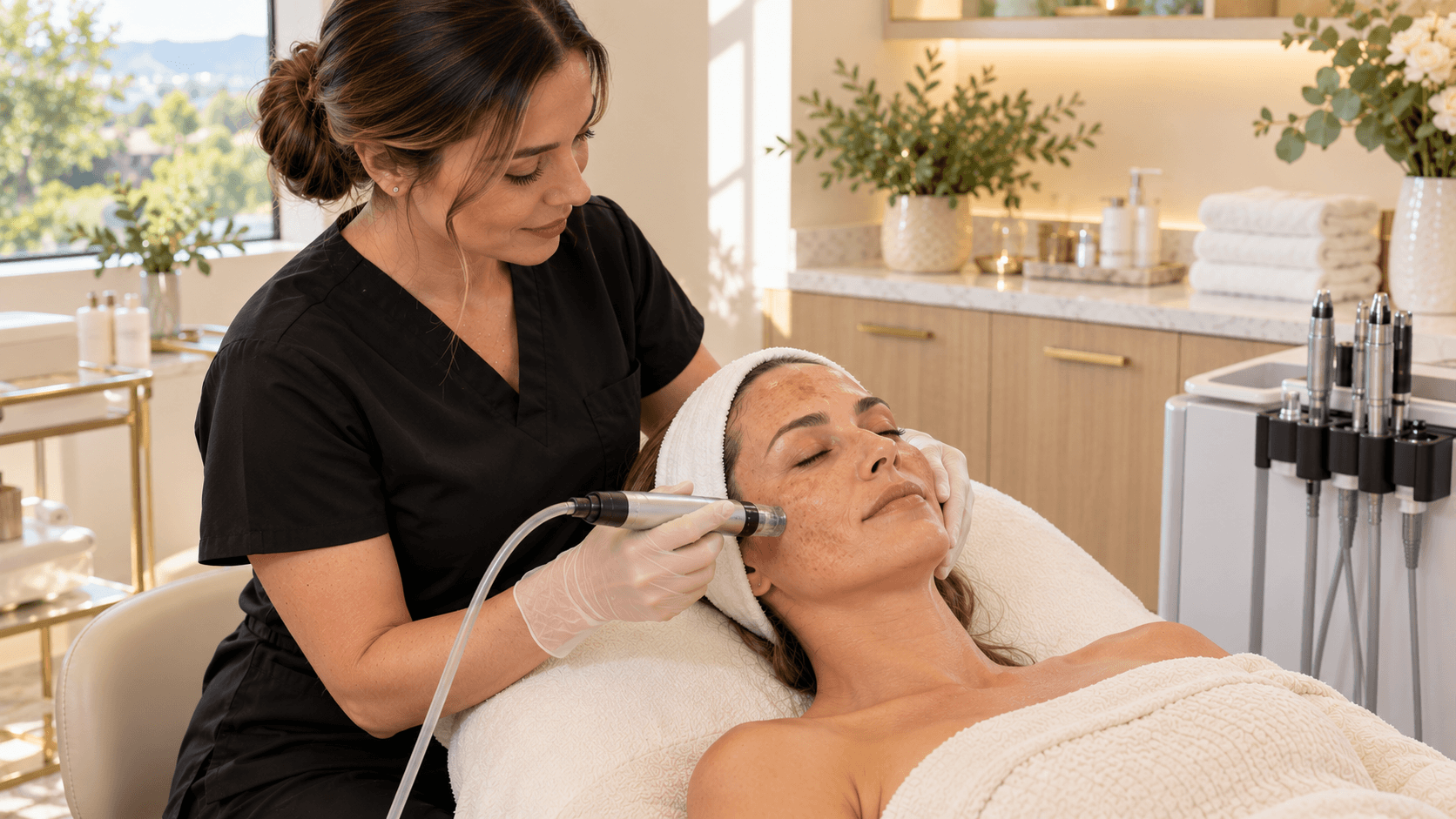
DiamondGlow technology uses a diamond-tipped handpiece designed to perform three functions during treatment.
Step 1: Exfoliation
Mechanical exfoliation helps remove accumulated dead skin cells from the surface.
When dry flakes are caused partly by superficial buildup, controlled exfoliation may improve the appearance of rough texture.
Potential cosmetic benefits include:
- Smoother-looking skin.
- Reduced appearance of surface flaking.
- More even-looking texture.
- A refreshed complexion.
However, removing flakes is not the same as treating the underlying cause of dryness.
If your skin is inflamed or significantly dehydrated, additional exfoliation may worsen discomfort.
Step 2: Extraction
DiamondGlow also incorporates suction-assisted extraction to remove surface debris.
This step may be particularly useful when dryness occurs alongside congestion or excess oil.
However, extraction intensity should be appropriate for the patient’s skin condition.
Not every person with dry skin needs aggressive pore cleansing.
Step 3: Serum Infusion
During treatment, DiamondGlow delivers topical serums selected according to the provider’s available options and the patient’s needs.
For dry skin, the goal may include supporting a more hydrated, comfortable-looking complexion.
The specific serums and enhancements included in a Platinum appointment should be confirmed before treatment.
Learn more about the intended Diamond Glow Facial Benefits and how professional resurfacing may complement your skincare routine.
3. Can DiamondGlow Actually Improve Flaky Winter Texture?
Yes, in appropriately selected patients, Diamond Glow Platinum for Dry Skin may help improve the appearance of surface flaking and uneven texture.
But the reason your skin is flaky matters.
When Flakiness Comes From Dead Skin Buildup
Dead skin cells naturally accumulate on the skin’s surface.
When buildup becomes noticeable, the complexion may look dull or feel uneven.
Controlled exfoliation can remove some of this material, temporarily creating a smoother appearance.
This may be helpful when your main concerns include:
- Mild surface flaking.
- Dull-looking skin.
- Rough makeup application.
- Uneven-looking texture.
- Superficial buildup.
When Flakiness Signals Irritation
Flaky skin isn’t always a sign that you need exfoliation.
It may also indicate irritation, a disrupted skin barrier, eczema, or another skin condition.
If your skin burns when applying moisturizer, appears cracked, or develops persistent redness, additional resurfacing may make symptoms worse.
The smarter move is to address the underlying irritation before scheduling an exfoliating facial.
For more information about changing skin needs, explore Seasonal Skin Changes.
4. Who Is a Good Candidate for Diamond Glow Platinum During Winter?
The ideal candidate isn’t simply anyone with dry skin.
Treatment suitability depends on the severity of dryness, skin sensitivity, and overall barrier condition.
Patients Who May Benefit
Diamond Glow Platinum may be worth discussing if you have:
- Mild winter dryness.
- Rough-looking surface texture.
- Dullness associated with dead skin buildup.
- Dryness combined with mild congestion.
- Skin that generally tolerates professional exfoliation.
A professional consultation can help determine whether treatment is appropriate.
Patients Who May Need to Wait
DiamondGlow may not be suitable when skin is actively irritated or compromised.
Consider postponing treatment and seeking professional advice if you experience:
- Cracked or broken skin.
- Active eczema or dermatitis flares.
- Significant redness or inflammation.
- Recent sunburn.
- Persistent stinging or burning.
- Unexplained rashes.
If you’re unsure whether your symptoms reflect dryness or another condition, explore Dry or Oily Skin and discuss your concerns with a qualified professional.
5. Diamond Glow Platinum vs. Diamond Glow Signature for Dry Skin
Patients comparing professional facial options may wonder whether Platinum is automatically better for winter dryness.
Not necessarily.
The right treatment depends on the services included and how your skin responds.
Diamond Glow Platinum
Diamond Glow Platinum may appeal to patients seeking a comprehensive professional facial experience.
However, the exact enhancements, serums, and treatment steps included in a Platinum appointment should be confirmed with the provider.
Diamond Glow Signature
Diamond Glow Signature is another option for patients interested in DiamondGlow-based skincare.
When comparing the two, ask:
- What treatment steps are included?
- Which serums are available?
- Can exfoliation intensity be adjusted?
- Which option is more suitable for winter dryness?
- What aftercare is recommended?
More treatment steps don’t automatically mean better results for sensitive or dry skin.
The most appropriate facial is one that addresses your concerns without creating unnecessary irritation.
6. How Does DiamondGlow Compare With Other Treatments for Dry Skin?
DiamondGlow isn’t the only professional option for improving rough winter texture.
Depending on your skin condition, a different facial may be more appropriate.
DiamondGlow vs. Dermaplaning
Dermaplaning uses a specialized blade to remove surface dead skin cells and fine facial hair.
DiamondGlow uses diamond-tip exfoliation along with extraction and serum infusion.
Both treatments can improve the appearance of surface texture, but neither is automatically appropriate for severely irritated skin.
Read Dermaplaning for Dry Skin to explore how these approaches differ.
DiamondGlow vs. HydraFacial
DiamondGlow and HydraFacial both combine resurfacing with professional skincare delivery, but they use different treatment technologies.
DiamondGlow incorporates diamond-tip exfoliation, while HydraFacial uses a different resurfacing and suction-based system.
Treatment suitability depends on skin sensitivity, desired results, and the specific protocol used.
Explore HydraFacial vs Diamond Glow for a closer comparison.
Hydration-Focused Spa Facials
If your skin is very dry or reactive, a gentler facial focused on hydration and comfort may be preferable to intensive exfoliation.
Review available Spa Facial Therapies to explore additional options.
7. How Often Should You Get Diamond Glow Platinum for Dry Skin?
Treatment frequency should be individualized.
For some patients, appointments spaced approximately four to six weeks apart may be a reasonable starting point for general maintenance.
However, this is not a universal recommendation.
When Monthly Treatments May Be Appropriate
Patients with mild dryness and good tolerance for exfoliation may be able to incorporate periodic DiamondGlow appointments into their skincare routine.
A provider should evaluate how the skin responds before recommending repeat treatments.
When Longer Intervals Are Better
If you experience persistent dryness, sensitivity, or irritation after treatment, your skin may need more recovery time.
In some cases, switching to gentler care may be more beneficial than scheduling another resurfacing appointment.
Why Overexfoliation Can Backfire
Frequent exfoliation may increase dryness and disrupt the skin barrier.
Signs of overexfoliation can include:
- Increased redness.
- Tightness or burning.
- Persistent flaking.
- Unusual sensitivity.
- Discomfort when applying skincare products.
If these symptoms occur, stop additional exfoliation and seek guidance from your skincare professional.
8. How Can You Maintain Smoother Skin After Diamond Glow Platinum?
A professional facial may improve the appearance of winter texture, but maintaining those results requires consistent home care.
Use a Gentle Cleanser
Choose a mild cleanser that doesn’t leave your skin feeling stripped or tight.
Avoid harsh scrubs and aggressive cleansing tools, especially immediately after treatment.
Moisturize Regularly
Apply a moisturizer suited to your skin type.
Ingredients such as glycerin, ceramides, and hyaluronic acid are commonly used in products intended to support skin hydration.
For particularly dry skin, richer creams may be more comfortable than lightweight lotions.
Avoid Excessive Exfoliation
Your skin has already undergone professional resurfacing.
Ask your provider when it is appropriate to restart retinoids, exfoliating acids, or other active products.
Protect Your Skin From the Sun
UV exposure remains relevant during winter.
Use broad-spectrum sunscreen with SPF 30 or higher as part of your daily routine.
Adjust Your Routine With the Weather
Skin needs can change as temperatures and humidity levels fluctuate.
You may need a richer moisturizer or gentler cleanser during colder months.
For practical seasonal guidance, explore Winter Skincare Maintenance and Winter Skin Care Tips.
Key Takeaways
Diamond Glow Platinum for Dry Skin may help improve the appearance of flaky winter texture when surface buildup contributes to roughness.
However, successful winter skincare requires more than exfoliation.
Here are the most important points to remember:
- DiamondGlow combines three steps: Exfoliation, extraction, and topical serum infusion.
- Mild flaking may improve: Removing surface buildup can create a smoother-looking complexion.
- Barrier health comes first: Severely irritated, cracked, or inflamed skin may need gentle care before professional resurfacing.
- Treatment should be personalized: The appropriate intensity and frequency depend on your skin’s condition.
- More exfoliation isn’t always better: Overdoing treatments can worsen dryness and sensitivity.
- Daily skincare supports results: Moisturizing, gentle cleansing, and sun protection remain essential.
The goal isn’t simply to remove visible flakes. It’s to help your skin look smoother while protecting the barrier that keeps it comfortable.
If you’re considering Diamond Glow Platinum for Dry Skin, schedule a professional consultation to determine whether the treatment fits your winter skincare needs.
FAQs
1. Can Diamond Glow Platinum help with flaky winter skin?
Diamond Glow Platinum for Dry Skin may improve the appearance of mild surface flaking by removing accumulated dead skin cells. Its serum infusion step may also contribute to a more hydrated-looking complexion. However, severe dryness or irritation may require barrier-focused care before exfoliation.
2. Is Diamond Glow Platinum safe for very dry or sensitive skin?
DiamondGlow may be suitable for some people with dry skin, depending on the severity of dryness and their overall skin condition. Patients with active irritation, cracked skin, or significant sensitivity may need to postpone treatment. A professional assessment helps determine whether the procedure is appropriate.
3. How often should I get Diamond Glow Platinum during winter?
Some patients may consider treatments approximately every four to six weeks for general skincare maintenance. However, dry or sensitive skin may require longer intervals or gentler alternatives. Your provider should recommend a schedule based on your skin’s response rather than a fixed routine.
4. Does Diamond Glow Platinum repair the skin barrier?
DiamondGlow is primarily a resurfacing and serum-infusion treatment, not a guaranteed solution for repairing a damaged skin barrier. Although some patients may notice smoother or more hydrated-looking skin, persistent barrier problems require appropriate skincare and sometimes medical treatment. Gentle cleansing, consistent moisturizing, and avoiding unnecessary irritation remain important.
5. What should I avoid after Diamond Glow Platinum for dry skin?
Avoid harsh scrubs, excessive exfoliation, and potentially irritating skincare products until your provider advises otherwise. Follow your aftercare instructions, moisturize regularly, and use daily sun protection. Contact your provider if you develop persistent redness, burning, or worsening dryness.