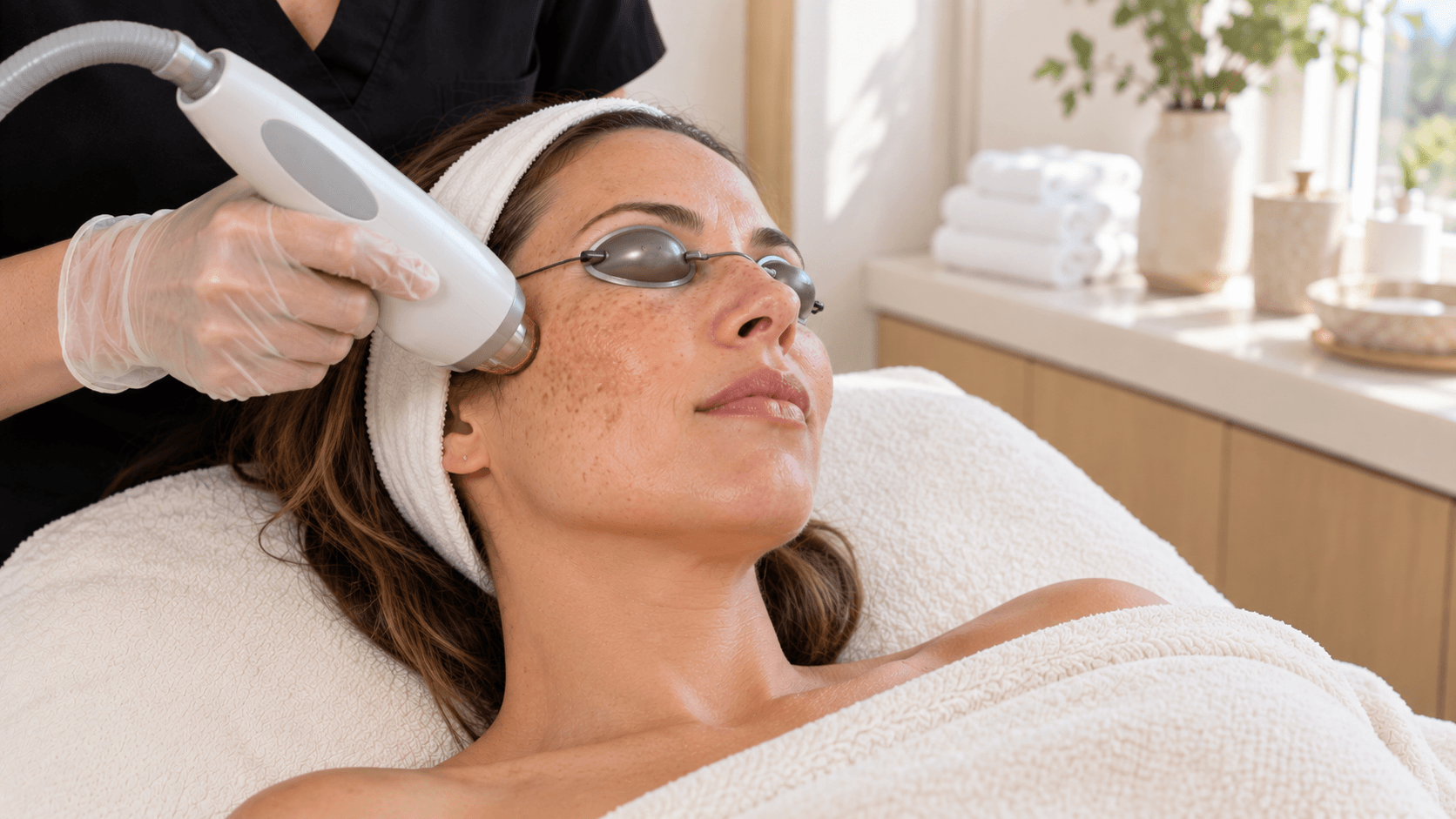
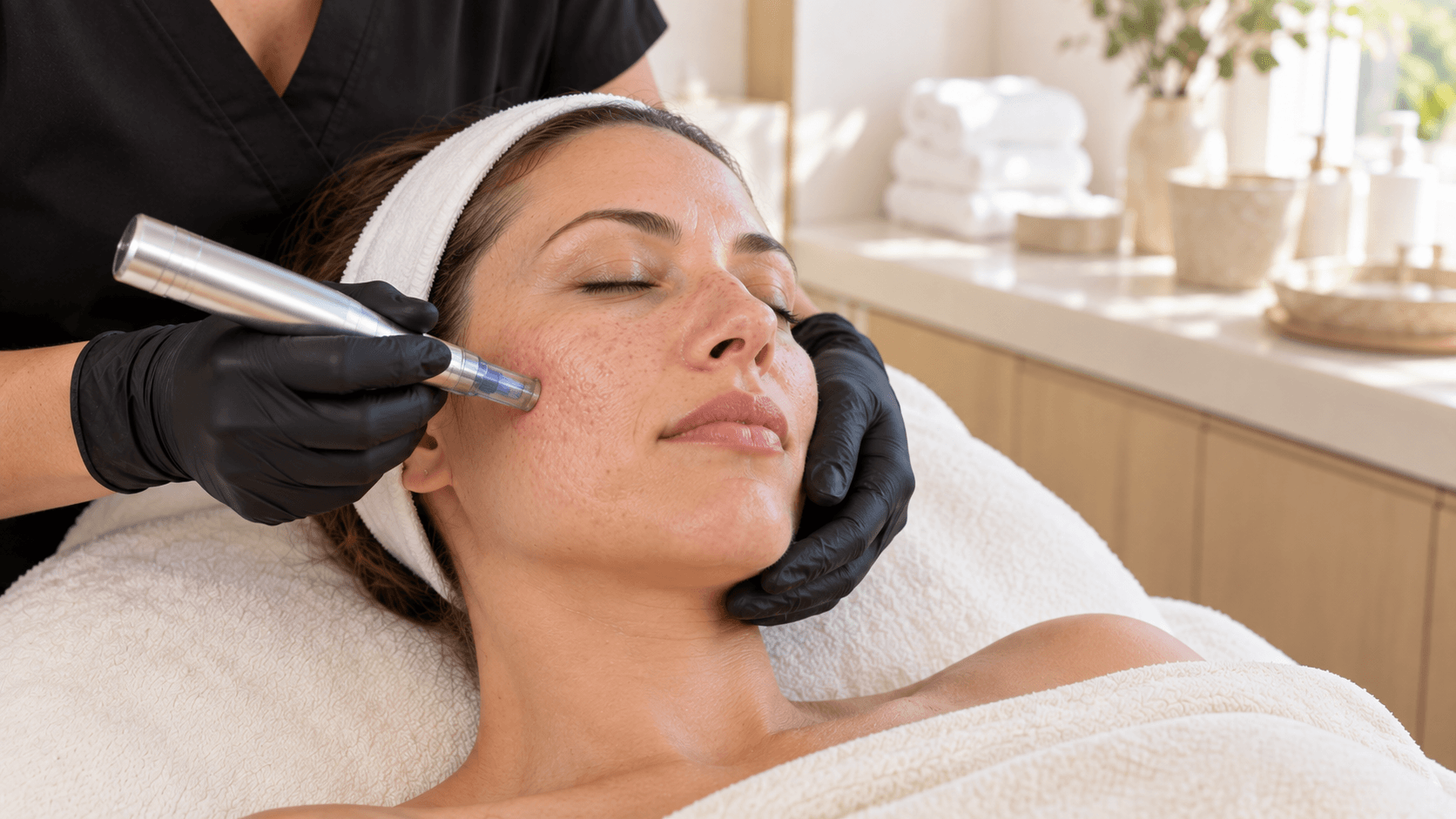
When one skin rejuvenation treatment delivers results, combining it with another can sound like an obvious upgrade. If a chemical peel improves the skin’s surface and microneedling encourages renewal deeper within the skin, why not schedule both and aim for the best of both worlds?
The answer is more nuanced.
Getting a chemical peel before microneedling can be part of a thoughtfully designed treatment plan, but more treatment does not automatically mean better results. The type and strength of the peel, the microneedling procedure being performed, your skin concerns, and — critically — the amount of recovery time between treatments all matter.
At Skin Care Institute, patients can access both professional chemical peels and advanced microneedling options. This makes personalized treatment planning especially important because the right sequence should be based on what your skin needs rather than simply stacking popular procedures together.
Here’s what to consider before combining them.
Jump to:
- TLDR – Quick Guide
- Detailed Breakdown: Should You Get a Chemical Peel Before Microneedling?
- Why Would Someone Get a Chemical Peel Before Microneedling?
- Should You Get a Chemical Peel Immediately Before Microneedling?
- How Long Should You Wait Between a Chemical Peel and Microneedling?
- Does the Type of Microneedling Matter?
- When Might a Chemical Peel Before Microneedling Make Sense?
- When Might You Need to Wait?
- Chemical Peel First or Microneedling First?
- Can You Combine Chemical Peels and Microneedling for Better Results?
- Preparing for a Chemical Peel Before Microneedling
- What About Aftercare?
- How to Decide Which Treatment Plan Is Right for You
- Key Takeaways
- FAQs
TLDR – Quick Guide
Getting a chemical peel before microneedling may make sense for some patients, but the treatments should be professionally planned and appropriately spaced.
Here’s the short version:
- Chemical peels primarily exfoliate and resurface the skin.
- Microneedling creates controlled microchannels that support the skin’s renewal process.
- The treatments can address some overlapping concerns in different ways.
- A chemical peel should not automatically be performed immediately before microneedling.
- Peel strength can affect the amount of recovery time your skin needs.
- Skin should be adequately recovered before undergoing another intensive procedure.
- Combining treatments may be useful when addressing multiple concerns.
- Your treatment sequence should depend on your skin, goals, and the procedures selected.
- Stronger or more advanced treatments require particularly thoughtful planning.
- Professional evaluation is the best way to determine whether a chemical peel belongs before microneedling in your treatment plan.
Detailed Breakdown: Should You Get a Chemical Peel Before Microneedling?
What Does a Chemical Peel Do?
A chemical peel is a resurfacing treatment designed to exfoliate the skin using a carefully selected chemical solution.
Depending on the peel selected, treatment can help improve concerns involving:
- Uneven-looking skin tone
- Dullness
- Rough texture
- Certain forms of discoloration
- Fine lines
- Congestion
- Overall skin appearance
Skin Care Institute offers different chemical peel options because not every complexion or concern requires the same level of exfoliation.
That distinction becomes particularly important when you’re considering a chemical peel before microneedling.
A lighter peel and a more intensive peel can create very different recovery needs. The question shouldn’t simply be, “Can I get a peel first?”
It should be, “Which peel, for which concern, and how should it fit into the overall treatment schedule?”
What Does Microneedling Do?
Microneedling approaches skin rejuvenation differently.
Rather than exfoliating the outer layers of the skin with a chemical solution, microneedling creates controlled microscopic channels in the treatment area. These controlled micro-injuries encourage the skin’s natural renewal response.
Microneedling may be selected to address concerns involving:
- Skin texture
- Fine lines
- Acne scars
- Uneven-looking skin
- Overall skin quality
Skin Care Institute offers SkinPen Microneedling with PRP or Exosomes, providing options that can be incorporated into personalized skin rejuvenation plans.
Because chemical peels and microneedling work differently, combining them strategically may allow a provider to address multiple aspects of a patient’s concerns.
The keyword, however, is strategically.
Why Would Someone Get a Chemical Peel Before Microneedling?
There are several reasons a provider might include both treatments in a broader skin rejuvenation plan.
1. The Treatments Address Skin Differently
Chemical peels focus heavily on resurfacing and exfoliation.
Microneedling focuses on controlled stimulation of the skin’s renewal process.
When someone has multiple concerns — such as uneven tone combined with rough texture — using different treatment approaches over time may make more sense than expecting one procedure to accomplish everything.
A chemical peel before microneedling may therefore be planned as part of a staged approach.
The objective isn’t to make the skin endure as much treatment as possible.
It’s to use complementary procedures intelligently.
2. A Peel Can Target Surface-Level Concerns First
For certain patients, it may make sense to begin by addressing visible surface concerns.
A chemical peel can exfoliate accumulated dead skin cells and support a smoother, fresher-looking complexion. Once the skin has appropriately recovered, microneedling may then be used to target additional texture or rejuvenation goals.
Think of it as sequencing rather than stacking.
Each treatment has its job.
3. Combination Planning Can Address Multiple Goals
People rarely walk into a skincare consultation with exactly one concern.
Someone may simultaneously want to improve:
- Uneven texture
- Dullness
- Fine lines
- Visible pores
- Acne-related texture
- Discoloration
- General skin quality
One treatment may be particularly appropriate for some concerns while another addresses others.
A personalized combination plan can therefore make sense when several issues are being addressed.
Skin Care Institute’s broader skin rejuvenation options demonstrate why treatment selection should start with the concern rather than with a predetermined procedure.
Should You Get a Chemical Peel Immediately Before Microneedling?
Not automatically.
This is where enthusiasm for combination treatments needs to meet sensible skin care.
Both chemical peels and microneedling deliberately create controlled changes in the skin. Performing procedures too aggressively or without appropriate recovery may result in more irritation than benefit.
After a chemical peel, the skin may experience temporary:
- Redness
- Dryness
- Flaking
- Peeling
- Sensitivity
- Tightness
The degree depends heavily on the peel.
Microneedling can also temporarily leave skin looking red, sensitive, or irritated.
For that reason, the skin’s condition — not an arbitrary calendar date — should help determine when it is ready for the next procedure.
How Long Should You Wait Between a Chemical Peel and Microneedling?
There isn’t one waiting period that applies to everyone.
The appropriate interval can depend on:
- Type of chemical peel
- Strength and depth of the peel
- Skin sensitivity
- Recovery response
- Microneedling treatment selected
- Intensity of the planned microneedling session
- Other products or treatments being used
- Individual skin goals
A mild peel may involve a very different recovery process from a more intensive peel.
That is why searching for a universal answer such as “wait exactly X days” can be misleading.
Your provider should evaluate how your skin has recovered before proceeding.
The goal is to arrive at the microneedling appointment with skin that is ready for treatment — not skin that is still trying to recover from the last procedure.
Does the Type of Microneedling Matter?
Yes.
“Microneedling” isn’t necessarily one single treatment experience.
Traditional microneedling and radiofrequency microneedling use different technologies and can be recommended for different goals.
For example, Skin Care Institute offers Sylfirm X Microneedling with RF, which combines microneedling with radiofrequency energy.
That makes treatment planning even more important.
A patient considering a chemical peel before microneedling should make sure the provider knows exactly which microneedling procedure is planned. The appropriate sequence may change depending on the intensity and technology involved.
When Might a Chemical Peel Before Microneedling Make Sense?
A staged combination may be worth discussing if:
- You have both tone and texture concerns.
- Your provider believes the treatments complement one another.
- Your skin tolerates professional treatments appropriately.
- The chemical peel selected matches your skin type and concerns.
- Enough recovery time is planned between procedures.
- Your skin has fully settled before the next treatment.
- You have realistic expectations about gradual improvement.
- You are willing to follow pre- and post-treatment instructions.
The decision should be individualized.
Two people with similar-looking concerns can still need different treatment plans.
When Might You Need to Wait?
There are also situations in which moving directly from a chemical peel into microneedling may not make sense.
If your skin is still visibly irritated, peeling, unusually sensitive, or recovering from the peel, adding another intensive treatment may be premature.
Your provider may recommend waiting longer if the skin has not adequately recovered.
This is particularly important because cosmetic treatment shouldn’t become a race.
Giving the skin appropriate recovery time is part of the treatment — not wasted time between treatments.
Chemical Peel First or Microneedling First?
There is no universal winner.
Whether you should schedule a chemical peel before microneedling or take the opposite approach depends largely on what you’re trying to improve.
A provider may prioritize a chemical peel when surface-level concerns are the immediate focus. Microneedling may be prioritized when texture, scars, or other rejuvenation goals are more prominent.
In other cases, the treatments may alternate over a longer treatment plan.
Instead of asking which procedure should always come first, ask:
Which concern should we address first?
That’s a much more useful starting point.
Can You Combine Chemical Peels and Microneedling for Better Results?
Potentially — but “combine” shouldn’t automatically mean “perform them together.”
Combination treatment planning can mean using both procedures strategically over several appointments.
That distinction matters.
More aggressive treatment isn’t automatically more effective treatment. The objective is to give each procedure enough room to work while allowing the skin to recover appropriately.
A good treatment plan balances three things:
- What you’re trying to improve
- Which procedures best address those concerns
- How much recovery the skin needs between them
Skip the third point and the first two become considerably less useful.
Preparing for a Chemical Peel Before Microneedling
Preparation should be based on the exact procedures selected and your provider’s instructions.
Before treatment, make sure your provider knows about:
- Your current skincare products
- Recent aesthetic treatments
- Skin sensitivities
- Current irritation
- History of pigmentation concerns
- Acne or active breakouts
- Medications or topical products you use
- Your desired results
Do not assume every active skincare ingredient should continue unchanged before a procedure.
Your provider can explain what should be paused, continued, or adjusted based on your treatment plan.
What About Aftercare?
Aftercare is another reason professional planning matters.
Chemical peels and microneedling can temporarily make the skin more sensitive. Following treatment instructions can help support a smoother recovery.
Your provider may give specific guidance regarding cleansing, moisturizing, sun exposure, skincare products, and when to resume certain parts of your normal routine.
Resist the temptation to immediately add every active product back into your routine.
Freshly treated skin isn’t the time to freestyle.
Follow the plan you were given and contact your provider if you experience a reaction that concerns you.
How to Decide Which Treatment Plan Is Right for You
The best answer to “Should I get a chemical peel before microneedling?” begins with another question:
What are you trying to improve?
A professional consultation can assess:
- Skin type
- Skin tone
- Texture
- Pigmentation concerns
- Acne or acne scars
- Fine lines
- Sensitivity
- Previous treatment history
- Current skincare routine
- Desired outcome
- Available recovery time
From there, a provider can determine whether a chemical peel, microneedling, RF microneedling, or a carefully sequenced combination makes the most sense.
The objective isn’t to collect treatments.
It’s to build a treatment plan.
Key Takeaways
- Getting a chemical peel before microneedling may be beneficial for some patients when the treatments are appropriately planned.
- Chemical peels and microneedling work differently, which can make them complementary for certain skin concerns.
- Chemical peels primarily focus on exfoliation and resurfacing, while microneedling encourages a controlled skin-renewal response.
- A chemical peel should not automatically be performed immediately before a microneedling treatment.
- The strength and depth of the chemical peel can affect how much recovery time is appropriate.
- The type of microneedling matters, particularly when comparing traditional microneedling with RF-based treatments.
- Skin should be adequately recovered from one procedure before another intensive treatment is performed.
- Treatment order should be based on your primary concerns rather than a universal “peel first” or “microneedling first” rule.
- Following professional pre- and post-treatment instructions is an important part of combination treatment planning.
- Skin Care Institute can personalize a plan using options such as chemical peels, SkinPen microneedling, RF microneedling, and other rejuvenation treatments based on individual goals.
FAQs
Should I get a chemical peel before microneedling?
A chemical peel before microneedling may make sense when both treatments address different parts of your overall skin concerns. However, they should be appropriately sequenced so the skin has sufficient time to recover between procedures. A professional evaluation can determine whether using both treatments is appropriate for your skin.
How long should I wait between a chemical peel and microneedling?
There is no single waiting period that is appropriate for every patient or every type of chemical peel. Timing can depend on peel strength, skin sensitivity, recovery, and the type of microneedling procedure planned. Your provider should determine when your skin has recovered sufficiently for the next treatment.
Can a chemical peel and microneedling be done on the same day?
Whether procedures can or should be performed close together depends on the specific treatments, their intensity, and the individual’s skin. Because both treatments can temporarily increase sensitivity, combining them without an appropriate professional plan may create unnecessary irritation. Follow the treatment sequence recommended by your provider rather than assuming same-day treatment will produce better results.
Which is better, a chemical peel or microneedling?
Neither treatment is universally better because they work differently and can address different concerns. Chemical peels emphasize exfoliation and resurfacing, while microneedling focuses on controlled stimulation of the skin’s renewal process. The better choice depends on your skin, concerns, and desired outcome.
Can a chemical peel before microneedling improve my results?
Using both procedures in a carefully planned treatment program may allow different skin concerns to be addressed through complementary approaches. Better results are not guaranteed simply because two treatments are used, and appropriate timing remains important. A personalized consultation can determine whether a chemical peel before microneedling offers a logical advantage for your specific goals.