Crepey neck skin can be frustrating because it rarely comes down to just one issue. Fine lines, uneven texture, sun damage, and skin laxity can overlap, making it difficult to know which treatment actually matches what you see in the mirror.
That is where Fraxel on neck skin enters the conversation.
Fraxel is generally considered when the goal involves improving the appearance and texture of aging or damaged skin. But there is an important distinction to make: crepey texture and significant loose skin are not necessarily the same concern, and they may call for different approaches.
At Skin Care Institute, patients can explore treatment options based on the specific characteristics of their skin rather than simply choosing a procedure because they recognize its name.
So, when is Fraxel on neck skin actually worth considering? It starts with understanding what you want to change.
Jump to:
TLDR – Quick Guide
Fraxel on neck skin may be worth discussing when:
- Crepey or uneven texture is a primary concern.
- Fine lines contribute to an aged appearance.
- Visible sun damage makes the neck look uneven.
- Improving skin quality is more important than achieving a dramatic lifting effect.
- You want to explore a laser-based resurfacing approach.
- A qualified provider determines that the treatment fits your skin and goals.
On the other hand, significant sagging may require a different conversation. If loose skin is the main concern, comparing resurfacing with treatments aimed more specifically at tightening can help set realistic expectations.
The key is simple: match the treatment to the problem, not the problem to the treatment.
Detailed Breakdown
What Does Crepey Neck Skin Actually Look Like?
“Crepey” is commonly used to describe skin that appears thin, finely wrinkled, or crinkled.
On the neck, that appearance can involve several visible concerns at once:
- Fine lines
- Uneven texture
- Wrinkling
- Uneven pigmentation
- Visible sun damage
- Reduced firmness
- Loose or sagging skin
That overlap is exactly why deciding on Fraxel on neck treatment shouldn’t begin with the laser itself.
Instead, start by identifying what bothers you most.
Someone primarily concerned about rough, finely wrinkled skin has a different goal from someone whose main concern is hanging or significantly loose skin. Even if both people call their problem a “crepey neck,” they may not benefit from the same treatment strategy.
How Does Fraxel Fit Into Laser Skin Resurfacing?
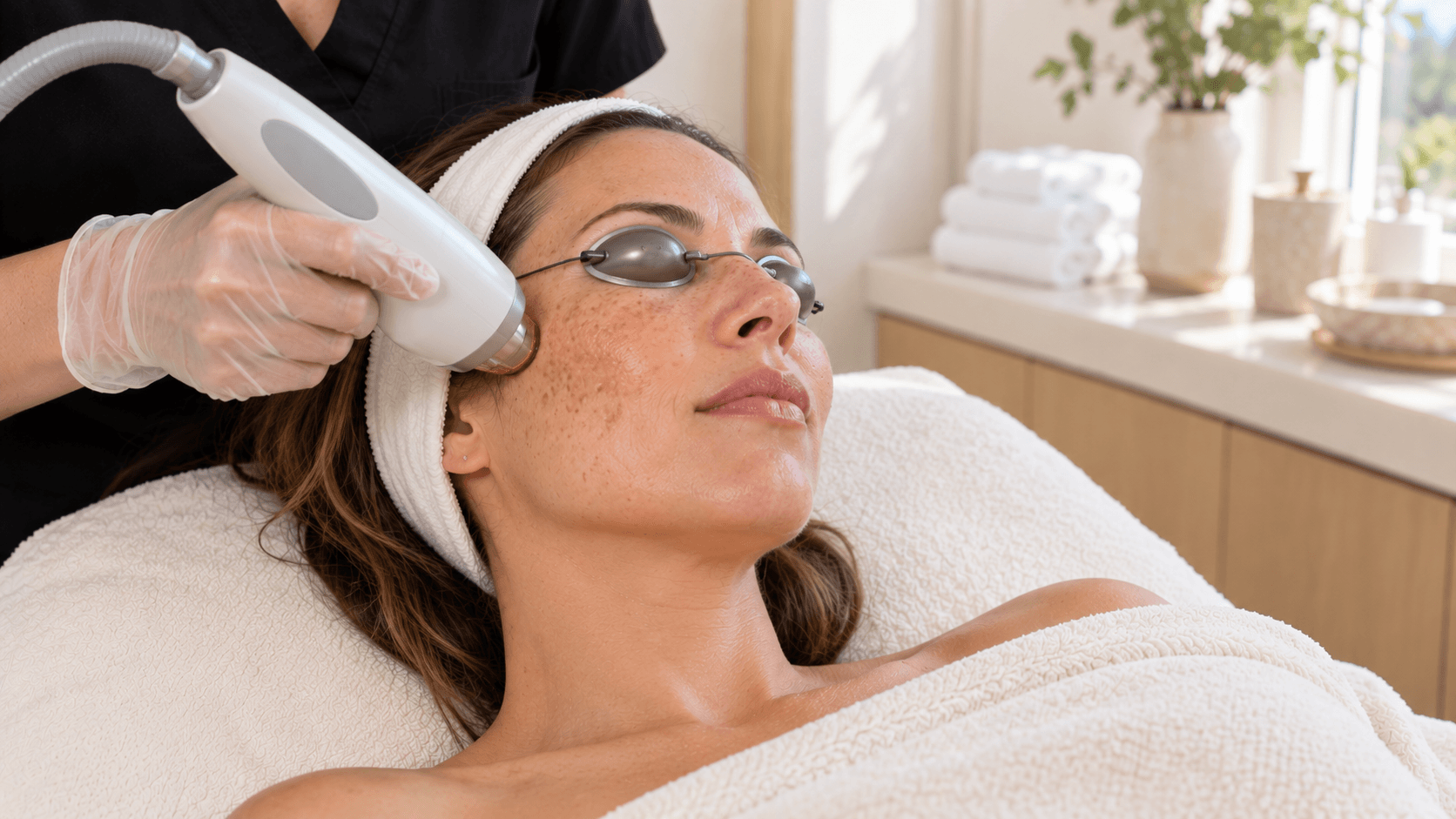
Fraxel falls within the broader conversation around fractional laser resurfacing.
Rather than viewing the treatment as a universal fix for neck aging, it makes more sense to consider it as one possible tool for improving certain aspects of skin quality.
Patients interested in the broader category can explore Laser Skin Resurfacing to better understand where laser-based treatments may fit into an individualized aesthetic plan.
For Fraxel on neck skin, the central question should be:
Is the appearance I want to improve primarily a surface and texture issue, or is significant laxity driving the problem?
That distinction can make treatment planning much clearer.
When Is Fraxel on Neck Skin Worth Considering?
When Crepey Texture Is the Main Concern
If your neck looks finely crinkled, rough, or uneven, discussing fractional resurfacing may make sense.
The goal here isn’t necessarily to change the shape of the neck. Instead, the focus is on improving the visible quality of the skin.
That distinction matters.
When someone says, “I want my neck skin to look smoother,” Fraxel on neck skin may be more relevant than when someone says, “I want this loose skin lifted.”
Similar descriptions can hide very different goals.
When Fine Lines Contribute to the Crepey Appearance
Fine lines can make the neck appear considerably more textured.
When numerous small lines develop across the skin, they can create the characteristic crinkled appearance people describe as crepey.
In this situation, a resurfacing conversation makes sense because the concern centers on the visible surface of the skin.
However, deeper folds or substantial hanging skin may point toward a different concern. That’s why the severity and type of aging matter as much as the location being treated.
When Sun Damage Is Also Visible
The neck is easy to neglect when applying sunscreen and skincare products. Over time, visible signs of environmental exposure can make its appearance noticeably different from the face.
If pigmentation and uneven tone are part of the problem, exploring Sun Damage can help clarify how those concerns fit into a broader treatment plan.
This is especially relevant because “crepey” may describe more than texture alone.
A patient might actually be bothered by a combination of:
texture + fine lines + discoloration + reduced firmness.
Recognizing the combination can lead to a more thoughtful treatment plan than treating each visible change as if it were the same issue.
When Might Fraxel on Neck Skin Not Be Enough?
This is arguably the most important part of deciding whether Fraxel on neck skin is worth considering.
If the main concern is significant sagging or loose tissue, resurfacing may not address everything you want changed.
Think of the difference this way:
Texture concern:
“My neck looks crinkled, rough, lined, or uneven.”
Laxity concern:
“My neck skin feels loose or hangs more than I want.”
Combination concern:
“My neck is both crepey and noticeably loose.”
Those are three different starting points.
Patients whose primary concern is Sagging or Loose Skin should consider that concern specifically rather than assuming every sign of neck aging calls for resurfacing.
The more significant the laxity, the more important it becomes to discuss whether a treatment aimed at tightening rather than resurfacing is a better fit.
Fraxel vs. Tightening Treatments for the Neck
This is where treatment terminology can get confusing.
Different technologies may be discussed for an aging neck, but that doesn’t mean they are interchangeable.
A person focused on surface texture may have different priorities from someone focused on laxity. Likewise, someone experiencing both may need a treatment strategy that accounts for multiple concerns.
The comparison of Ultherapy vs Fraxel for Turkey Neck provides additional context for understanding why the “best” option depends on what you are trying to accomplish.
Instead of asking:
“Which treatment is better?”
A more useful question is:
“Which treatment is better for my specific concern?”
That small change can lead to a much more productive consultation.
How Does Sun Damage Affect the Decision?
Sun damage deserves special attention when evaluating crepey neck skin.
If the neck appears uneven in both texture and tone, focusing exclusively on tightness could overlook an important part of what is making the area look aged.
This is why evaluating the neck as a whole matters.
Look at:
- Texture
- Fine lines
- Pigmentation
- Overall tone
- Firmness
- Degree of loose skin
If texture and visible sun damage dominate the picture, Fraxel on neck skin may be worth discussing as part of the treatment conversation.
If significant laxity dominates instead, resurfacing may not be the only consideration.
What Results Should You Expect?
The most useful expectation is improvement rather than perfection.
Aesthetic treatments should be selected according to the concerns they’re intended to address. Expecting a resurfacing-focused approach to completely correct significant loose skin can create disappointment even if the treatment successfully improves other aspects of the skin’s appearance.
Your goals should therefore be specific.
Instead of saying:
“I want my neck to look younger.”
Try identifying what that means:
“I want the texture to look smoother.”
“I want the fine lines to be less noticeable.”
“I want the uneven appearance from sun exposure addressed.”
“I want the loose skin to look tighter.”
These statements give a provider considerably more information.
The more precise the goal, the easier it becomes to determine whether Fraxel on neck treatment belongs in the conversation.
Is Fraxel on Neck Skin Worth It If You Have Both Texture and Laxity?
Potentially—but this is where individualized treatment planning becomes especially important.
Some people don’t have a single neck concern. They may see fine lines, crepey texture, sun damage, and looseness simultaneously.
In that situation, asking one treatment to solve every problem may be unrealistic.
Instead, the treatment discussion can separate the concerns:
- What is contributing to the surface texture?
- What is contributing to discoloration?
- How much genuine skin laxity is present?
- Which concern matters most to you?
- Would one approach or a combination make more sense?
This is a more useful framework than simply searching for the “best treatment for an aging neck.”
How Do You Decide Whether Fraxel on Neck Skin Is Right for You?
Start by looking closely at what you actually want to improve.
If you could change only one thing about your neck, would it be the texture, fine lines, discoloration, or looseness?
If crepey texture, visible lines, or surface quality sit at the top of that list, asking about Fraxel may be worthwhile.
If substantial sagging is the dominant concern, start the consultation there instead.
And if several concerns are equally important, make that clear.
The objective isn’t to find the most talked-about treatment. It’s to find an approach that matches your skin, your priorities, and the kind of improvement you realistically want to see.
Key Takeaways
- Fraxel on neck skin is worth discussing when crepey texture is a primary concern. Surface irregularities and fine lines create a different treatment goal from substantial sagging.
- Crepey skin and loose skin aren’t necessarily the same issue. Determining which concern is dominant can help narrow down the most appropriate treatment category.
- Sun damage can influence the overall appearance of the neck. Uneven tone and texture may occur alongside fine lines and should be considered during treatment planning.
- Fraxel shouldn’t automatically be treated as the answer to every aging-neck concern. The appropriate approach depends on whether texture, pigmentation, laxity, or several issues are present.
- Significant sagging deserves its own evaluation. If loose skin is the main complaint, treatments focused on tightening may warrant consideration.
- Combination concerns may require a broader strategy. Someone with texture, discoloration, and laxity may need a different plan from someone dealing with texture alone.
- Specific goals lead to better treatment conversations. “I want smoother texture” provides much more useful direction than simply saying, “I want my neck to look younger.”
- Professional evaluation matters. The decision to pursue Fraxel on neck skin should be based on your individual skin characteristics, priorities, and realistic expectations.
FAQs
Is Fraxel on neck skin worth considering for crepey texture?
Fraxel on neck skin may be worth discussing when fine lines, uneven texture, or a crepey surface are among your primary concerns. The important distinction is whether the problem is mostly skin texture or significant laxity. A professional evaluation can help determine whether laser resurfacing aligns with your goals.
Is Fraxel on neck skin the same as a skin-tightening treatment?
Fraxel and treatments focused primarily on tightening should not automatically be viewed as interchangeable. A resurfacing-focused treatment may be considered for different concerns than a treatment selected primarily for loose or sagging skin. Identifying which problem bothers you most can make the comparison more useful.
Can Fraxel on neck skin help if I also have sun damage?
Visible sun damage can occur alongside crepey texture, fine lines, and uneven tone on the neck. If several surface concerns are present, they should be evaluated together rather than assuming texture is the only issue. Your provider can determine which treatment approach best matches the combination of concerns.
What if my neck is both crepey and loose?
Having both texture changes and noticeable laxity can make treatment selection more complicated. One treatment may not necessarily address every component of an aging neck equally. Separating your goals into texture improvement and tightening can help guide a more individualized plan.
How do I know whether Fraxel on neck skin is right for me?
Start by identifying whether texture, lines, pigmentation, or sagging is your biggest concern. Then discuss those priorities with a qualified provider who can evaluate your skin directly. Fraxel on neck skin is worth considering when the treatment’s purpose aligns with the improvement you actually want.