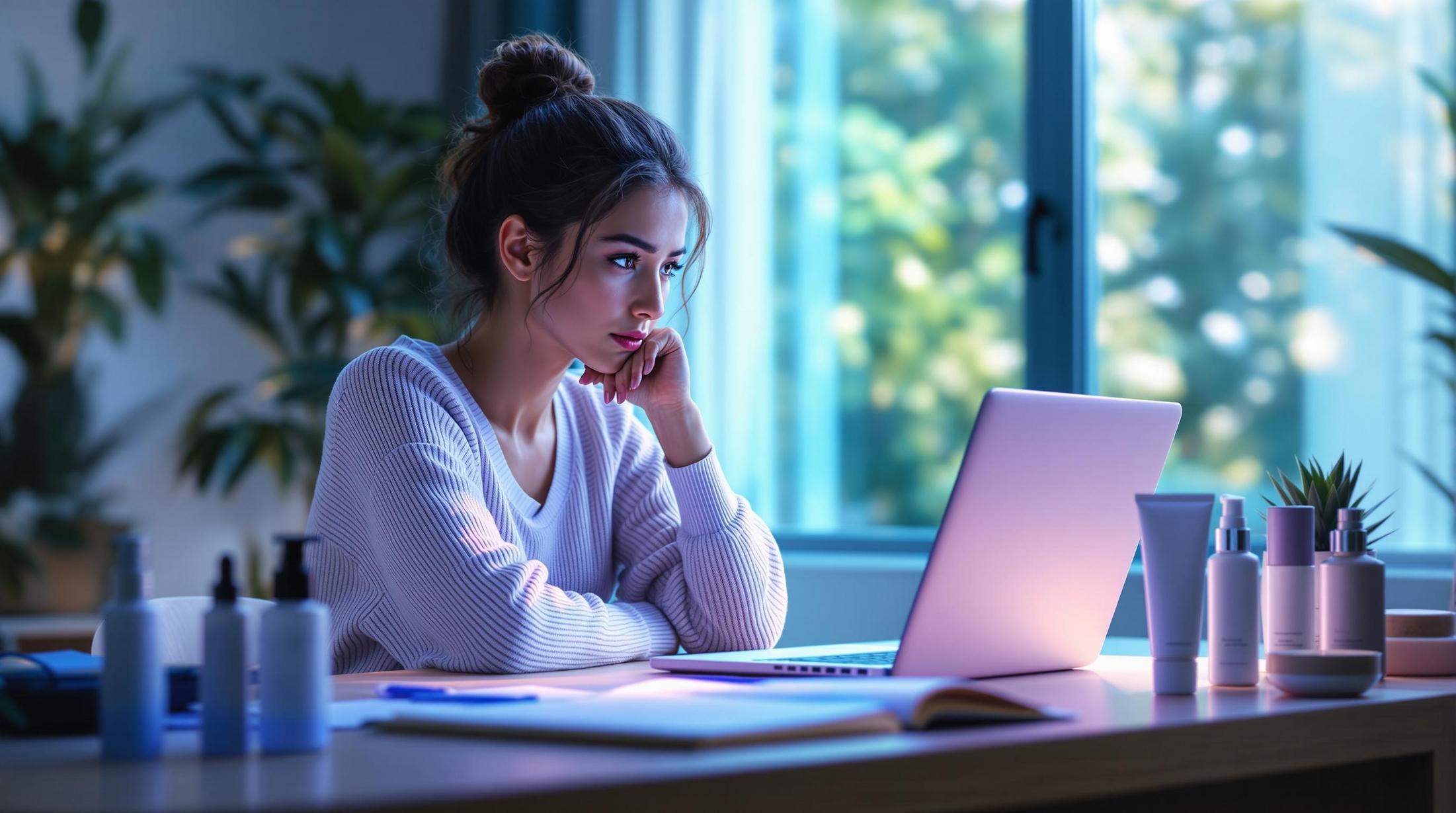
We’re glued to our screens—phones, tablets, laptops, and TVs. While we know blue light disrupts sleep, did you know it also affects your skin? Studies suggest prolonged exposure can lead to premature aging, hyperpigmentation, and inflammation. The good news? There are ways to protect your skin without giving up your devices.
This blog breaks down how blue light impacts your skin and what you can do to fight back.
TLDR – Quick Guide
- Blue light (HEV light) from screens can accelerate skin aging, cause pigmentation, and weaken skin barriers.
- Unlike UV rays, it penetrates deeper into the skin, triggering oxidative stress and inflammation.
- Protection tactics: Blue light-blocking skincare, screen filters, antioxidants, and adjusting screen habits.
- Night mode and blue light glasses help your eyes, but they don’t fully protect your skin.
- Investing in skincare with antioxidants and SPF is your best defense.
Now, let’s dive deeper into what’s really happening to your skin.
Detailed Breakdown
What Is Blue Light and How Does It Affect Skin?
Blue light (also known as High-Energy Visible or HEV light) is emitted from the sun and digital devices. While natural blue light helps regulate our circadian rhythm, prolonged exposure from screens may negatively impact the skin.
A 2018 study in the Journal of Biomedical Physics & Engineering found that blue light generates free radicals, causing oxidative stress, which accelerates aging and skin damage. Unlike UV rays, which damage the skin’s surface, blue light penetrates deeper into the dermis, affecting collagen and elastin levels.
Skin Issues Caused by Blue Light Exposure
- Premature Aging
- Blue light exposure can break down collagen and elastin, leading to wrinkles and sagging.
- A 2020 study published in Oxidative Medicine and Cellular Longevity found that blue light increases free radical damage, which speeds up skin aging.
- Hyperpigmentation
- Blue light exposure is linked to melanin production, leading to dark spots and uneven skin tone.
- A study in The Journal of Investigative Dermatology showed that people with darker skin tones are more prone to blue light-induced pigmentation.
- Inflammation and Redness
- Overexposure to blue light can trigger inflammatory responses, leading to redness, irritation, and even acne flare-ups.
- If you already have conditions like rosacea or eczema, blue light can worsen symptoms.
- Weakened Skin Barrier
- HEV light can impair the skin’s natural barrier, reducing its ability to retain moisture and fight off pollutants.
How to Protect Your Skin from Blue Light Damage
1. Use Skincare with Blue Light Protection
Look for products containing:
- Antioxidants (Vitamin C, E, and Ferulic Acid) – Fight free radical damage.
- Niacinamide – Strengthens the skin barrier and reduces pigmentation.
- Iron Oxide – Found in tinted sunscreens, it helps block blue light.
- Zinc Oxide & Titanium Dioxide (SPF) – A broad-spectrum sunscreen (SPF 30+) can offer some blue light protection.
2. Apply Sunscreen Indoors
Even if you’re not stepping outside, blue light from screens can cause skin damage. A tinted mineral sunscreen is best for blocking blue light.
3. Adjust Your Screen Settings
- Use night mode or blue light filters on your devices.
- Reduce screen brightness to lower blue light intensity.
- Consider anti-blue light screen protectors for added defense.
4. Eat Antioxidant-Rich Foods
Boost your skin’s ability to fight blue light damage from within by consuming:
- Berries (rich in Vitamin C)
- Green tea (loaded with polyphenols)
- Nuts & seeds (Vitamin E powerhouse)
- Dark leafy greens (packed with antioxidants)
5. Take Screen Breaks
The 20-20-20 rule (every 20 minutes, look 20 feet away for 20 seconds) isn’t just good for your eyes—it helps reduce prolonged blue light exposure on your skin.
Do Blue Light Glasses Help Protect Skin?
Not really. While they shield your eyes, they don’t prevent blue light from hitting your face. Your best bet? A combination of skincare, screen adjustments, and smart habits.
Key Takeaways
- Blue light from screens can accelerate aging, trigger pigmentation, and weaken your skin barrier.
- Unlike UV rays, HEV light penetrates deeper, increasing oxidative stress.
- Protect your skin with antioxidant-rich skincare, tinted sunscreen, and blue light filters.
- Adjust screen settings and reduce exposure to minimize damage.
- Blue light glasses help your eyes but don’t fully protect your skin.
Screens aren’t going anywhere, but with the right habits and skincare, you can keep your skin protected.
FAQs
1. Can blue light from screens really cause wrinkles?
Yes. Blue light penetrates deep into the skin, breaking down collagen and elastin, which leads to premature aging.
2. Is sunscreen enough to protect against blue light?
Not all sunscreens block blue light. Tinted mineral sunscreens with iron oxide offer better protection than chemical sunscreens.
3. Does night mode on my phone protect my skin?
Night mode reduces blue light strain on your eyes, but it doesn’t significantly lower skin exposure. Additional protection is needed.
4. Can blue light make acne worse?
Yes, prolonged exposure may trigger inflammation and worsen acne-prone skin. Using antioxidants and a strong skin barrier can help.
5. What is the best skincare ingredient for blue light protection?
Antioxidants like Vitamin C, niacinamide, and ferulic acid help neutralize blue light damage. Look for these in your skincare products.