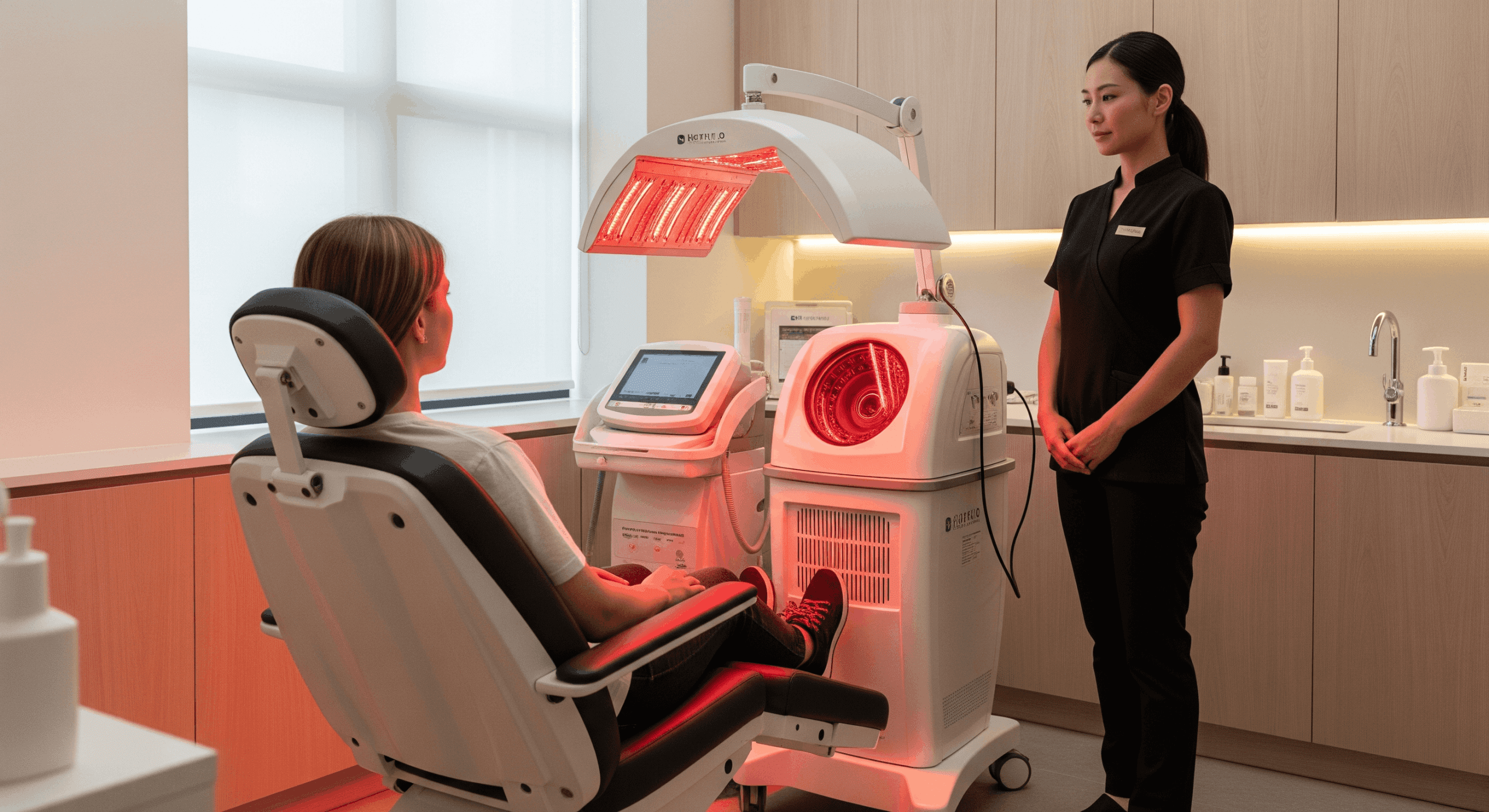
You invested in a professional treatment to improve your skin—maybe a chemical peel, microneedling session, laser procedure, or a new prescription retinoid. Instead of glowing immediately, you’re breaking out.
Now you’re wondering: is this normal? Or did something go wrong?
Understanding skin purging causes after treatments can help you tell the difference between temporary adjustment and true irritation. In many cases, purging is a short-term reaction that signals your skin is accelerating its renewal cycle—not failing.
Let’s break down what’s happening beneath the surface, how long it typically lasts, and when to be concerned.
Jump To:
- What Is Skin Purging?
- What Treatments Commonly Trigger Skin Purging?
- Why Skin Purging Happens After Professional Treatments
- What Skin Purging Looks Like
- How Long Does Skin Purging Last?
- Skin Purging vs. Irritation: How to Tell the Difference
- How to Manage Skin Purging Safely
- Can Skin Purging Be Prevented?
- When to Contact a Professional
- Key Takeaways
- FAQs
TLDR – Quick Guide
- Skin purging happens when cell turnover speeds up.
- It commonly follows retinoids, peels, lasers, and exfoliating treatments.
- Breakouts usually occur where you normally experience acne.
- Purging typically lasts 2–6 weeks.
- Persistent or worsening irritation may indicate a reaction—not purging.
What Is Skin Purging?
Skin purging is a temporary increase in breakouts triggered by accelerated cell turnover.
When certain professional treatments stimulate the skin to renew itself faster, they bring:
- Clogged pores
- Microcomedones (tiny, invisible blockages)
- Trapped oil and debris
To the surface more quickly than usual.
Instead of forming slowly over weeks, these blemishes surface in a shorter time frame.
Understanding skin purging causes after treatments begins with recognizing that purging is not new acne—it’s pre-existing congestion being revealed faster.
What Treatments Commonly Trigger Skin Purging?
Not all treatments cause purging. It’s usually associated with procedures or products that increase cellular turnover.
Common triggers include:
Retinoids and Retinol-Based Treatments
Prescription tretinoin or professional-strength retinol increases cell turnover dramatically. As pores clear out, temporary breakouts may occur.
Chemical Peels
Peels using glycolic acid, salicylic acid, or TCA stimulate exfoliation and cellular renewal, sometimes leading to short-term breakouts.
Microneedling
While primarily a collagen-stimulating treatment, microneedling can enhance product penetration and increase turnover, potentially triggering temporary purging.
Laser Resurfacing
Fractional and ablative lasers accelerate skin renewal and remodeling. As damaged tissue sheds, congestion may surface.
Patients undergoing advanced procedures at experienced practices like Skin Care Institute in Tulsa are typically advised that mild purging can occur as part of the healing process.
Why Skin Purging Happens After Professional Treatments
To better understand skin purging causes after treatments, it helps to understand the acne formation cycle.
Normally:
- Dead skin cells shed gradually
- Oil accumulates slowly
- Blockages form over time
When cell turnover accelerates:
- Dead skin sheds more quickly
- Pore blockages rise to the surface
- Existing congestion clears faster
This is why purging usually occurs in areas where you already tend to break out.
It does not usually appear in entirely new areas.
What Skin Purging Looks Like
Purging often presents as:
- Small whiteheads
- Blackheads
- Mild inflammatory pimples
- Clusters in typical acne-prone zones
Unlike allergic reactions, purging does not typically cause:
- Severe itching
- Hives
- Widespread redness
- Burning sensation
If new breakouts appear in unusual areas or irritation feels intense, it may not be purging.
How Long Does Skin Purging Last?
Most purging cycles last:
- 2–4 weeks for mild turnover treatments
- Up to 6 weeks for stronger retinoids or resurfacing procedures
Why that timeframe?
Because it aligns with your skin’s natural renewal cycle.
If breakouts persist beyond 6–8 weeks, worsen significantly, or spread unpredictably, reassessment is recommended.
Skin Purging vs. Irritation: How to Tell the Difference
Understanding skin purging causes after treatments also means knowing what it is not.
Likely Purging
- Breakouts in usual acne areas
- Occurs shortly after starting treatment
- Improves within 4–6 weeks
- Mild inflammation
Likely Irritation or Reaction
- Severe redness
- Stinging or burning
- New breakouts in unusual areas
- Persistent worsening beyond 6 weeks
- Dry, cracked skin with inflammation
If unsure, consult a professional before continuing active treatments.
You can explore professional skin evaluations and customized care options through the clinic’s comprehensive aesthetic services page.
How to Manage Skin Purging Safely
If purging occurs, resist the urge to over-correct.
Instead:
- Keep your routine simple
- Use gentle cleansers
- Avoid adding new actives
- Maintain hydration
- Use non-comedogenic moisturizer
- Wear sunscreen daily
Over-exfoliating to “clear it faster” often prolongs the process.
Patience is critical.
Can Skin Purging Be Prevented?
Not always—but it can be minimized.
Strategies include:
- Gradual introduction of retinoids
- Spacing out professional treatments
- Avoiding stacking strong exfoliants
- Maintaining barrier health before procedures
Professional guidance ensures treatments are tailored to your skin’s tolerance level.
When to Contact a Professional
Seek evaluation if:
- Breakouts persist beyond 8 weeks
- Painful cysts develop
- Severe irritation accompanies acne
- Skin feels increasingly compromised
A trained provider can determine whether your skin is purging—or reacting.
Key Takeaways
- Skin purging causes after treatments are usually linked to accelerated cell turnover.
- It brings pre-existing congestion to the surface faster.
- Most purging resolves within 2–6 weeks.
- Breakouts should occur in usual acne-prone areas.
- Persistent irritation may indicate a reaction, not purging.
Temporary flare-ups can be frustrating—but they often signal that your skin is actively renewing itself.
FAQs
What are the main skin purging causes after treatments?
Skin purging is typically caused by increased cell turnover from retinoids, chemical peels, microneedling, or laser treatments. These treatments accelerate the shedding process. Existing clogged pores surface more quickly.
How long does skin purging usually last?
Most purging lasts between two and six weeks. This corresponds to the skin’s natural renewal cycle. If breakouts persist longer, reassessment may be needed.
Is purging a good sign?
In many cases, yes. It indicates increased cell turnover and clearing of congestion. However, severe irritation is not normal.
Should I stop treatment if purging happens?
Mild purging is expected with some treatments. However, if irritation becomes severe or prolonged, consult your provider before continuing. Never add additional active products during purging.
Can professional treatments cause cystic acne during purging?
Purging usually involves smaller breakouts. Painful cystic acne may indicate irritation or reaction. Professional evaluation can clarify the cause.