Unwanted facial or body hair can be frustrating enough. When hormones are helping drive that growth, the situation becomes more complicated because removing existing hair doesn’t necessarily remove the reason new hair keeps appearing.
So, can laser hair removal still help?
Yes, laser hair removal hormonal hair growth treatment can still be worth considering. The important difference is that expectations, treatment frequency, and long-term maintenance may look different when hormonal changes continue stimulating hair growth.
At Skin Care Institute, laser hair removal is available for unwanted hair on areas including the face and body. For people dealing with hormonally influenced growth, the goal is to develop a realistic plan that reduces unwanted hair while recognizing that hormones can continue influencing future growth.
The question isn’t simply, “Does laser hair removal work?”
It’s “How does laser hair removal fit into managing hair growth when hormones remain part of the equation?”
Jump to:
TLDR – Quick Guide
Here’s what to know about laser hair removal hormonal hair growth:
- Laser hair removal targets active hair follicles.
- Multiple sessions are necessary because hairs grow in different cycles.
- Hormonal hair growth can still respond to laser treatment.
- Hormonal changes may continue stimulating new hair over time.
- Facial areas such as the chin and upper lip can be particularly influenced by hormones.
- Maintenance treatments may be needed after the initial series.
- Results should be viewed as long-term hair reduction rather than a promise that every hair will disappear permanently.
- A personalized treatment plan matters when hormonal factors are involved.
The bottom line: hormonal growth doesn’t automatically rule out laser hair removal. It does mean you should go into treatment understanding that ongoing hormonal stimulation can influence your long-term results.
Detailed Breakdown
What Is Hormonal Hair Growth?
Hair growth is influenced by several factors, and hormones can play a significant role.
Skin Care Institute’s information about Unwanted or Excess Hair identifies hormonal imbalances as one potential contributor to excessive hair growth.
For some people, this can mean unwanted hair appearing or becoming more noticeable on areas such as the:
- Chin
- Upper lip
- Jawline
- Neck
- Face
- Other areas of the body
Hormonal changes can make the situation different from ordinary unwanted hair because the underlying hormonal influence may continue even after existing follicles have been treated.
That’s the central issue to understand before starting laser hair removal hormonal hair growth treatment.
How Does Laser Hair Removal Work?
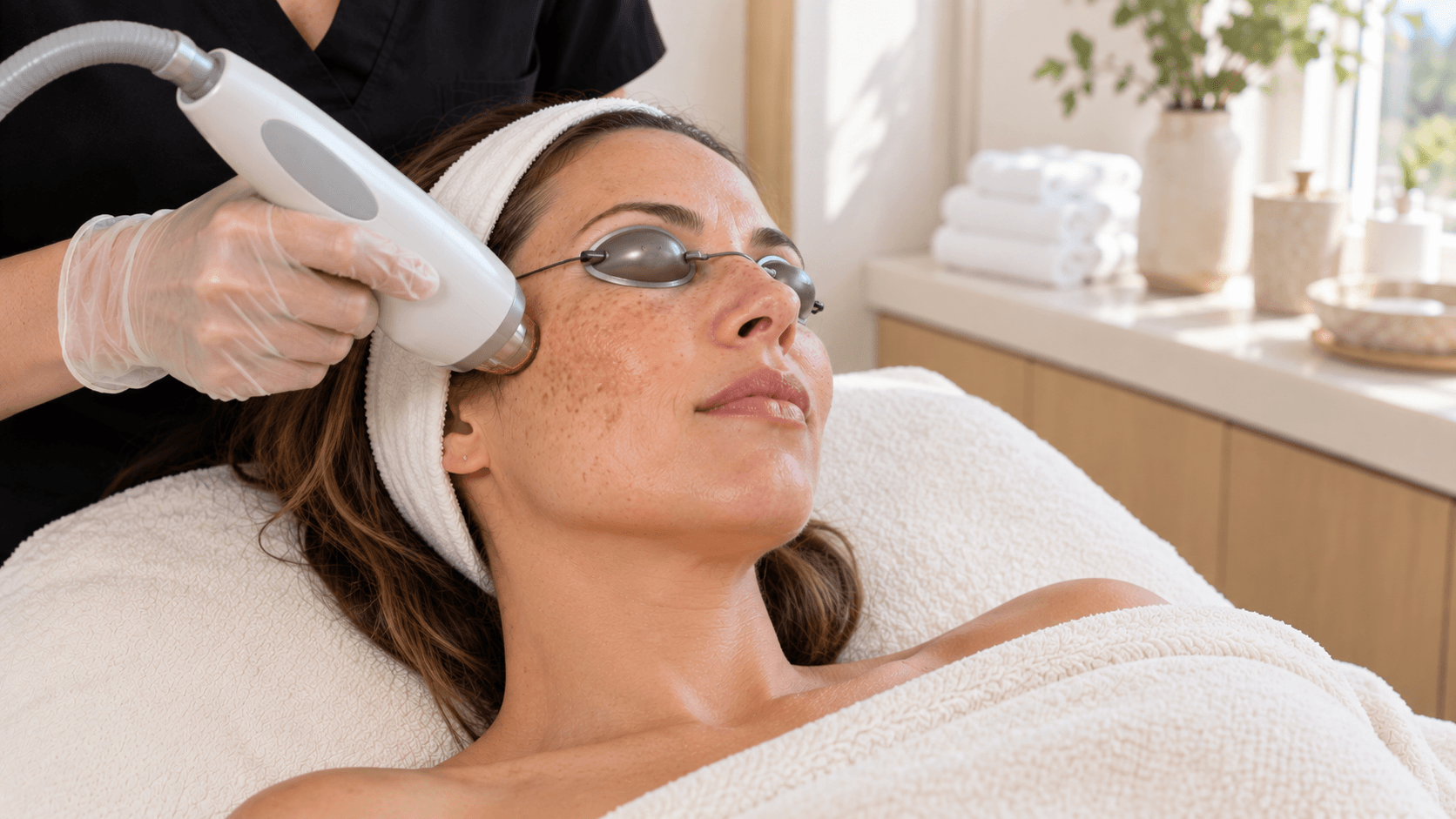
Laser Hair Removal uses laser energy to target unwanted hair.
The treatment is designed to damage hair follicles and reduce their ability to produce future hair.
However, not every follicle is at the same stage of its growth cycle at the same time.
That’s why laser hair removal isn’t typically a one-appointment treatment.
Multiple sessions allow the provider to target hairs as they move through the appropriate growth phase.
Think of it less like flipping one giant “hair off” switch and more like catching different groups of follicles at the right time.
Can Laser Hair Removal Work on Hormonal Hair Growth?
Yes—but with an important qualification.
Laser hair removal can target the hair follicles that are actively producing unwanted hair, even when hormones are contributing to that growth.
What the laser doesn’t do is change the underlying hormonal activity itself.
That’s why laser hair removal hormonal hair growth treatment can reduce unwanted hair while still leaving open the possibility that hormonal influences may stimulate additional growth later.
This is particularly important for facial hair.
Skin Care Institute’s information about Face Laser Hair Removal & Hormones notes that hormonal changes can influence facial hair growth and that some patients may require maintenance sessions to preserve their results.
So yes, treatment can work.
The realistic expectation is reduction and management, not a guarantee that hormones will never encourage another hair to appear.
Why Are Multiple Laser Hair Removal Sessions Needed?
Hair grows in cycles.
Laser treatment is most effective when hair is in the appropriate active growth stage, but all of your hairs aren’t conveniently synchronized.
Some follicles will be active during one appointment.
Others won’t.
That means treatment needs to happen over multiple sessions so additional hairs can be targeted as they enter an active stage.
Skin Care Institute’s Laser Hair Removal Services emphasize that a series of treatments is necessary to achieve optimal hair reduction.
Hormonal hair growth doesn’t change that basic principle.
What it can change is what happens after the initial series.
Why Can Hormonal Hair Growth Require Maintenance?
This is where laser hair removal hormonal hair growth differs from a straightforward unwanted-hair scenario.
Imagine that your initial laser series successfully reduces a large portion of visible hair.
Great.
But if hormones continue stimulating hair growth, new or previously less-active follicles may eventually produce noticeable hairs.
That doesn’t necessarily mean your original laser treatments “stopped working.”
It means the biological factor influencing hair growth is still present.
Skin Care Institute notes in its facial laser hair removal guidance that hormonal fluctuations can affect hair growth and that occasional maintenance treatments may be needed.
Maintenance can therefore be part of the long-term strategy rather than evidence of treatment failure.
Is Facial Hair More Complicated When Hormones Are Involved?
It can be.
The face is one of the areas where hormonally influenced hair growth can become particularly noticeable.
Common concerns may involve:
- Upper-lip hair
- Chin hair
- Jawline growth
- Neck hair
- Scattered coarse facial hairs
For someone repeatedly tweezing, shaving, or waxing these areas, laser treatment can offer another way to manage unwanted growth.
But facial hair influenced by hormones may require a different mindset.
Instead of asking:
“How many treatments until I never think about facial hair again?”
A more useful question is:
“How much reduction can I realistically achieve, and what maintenance might I need if hormonal growth continues?”
That sets up a much more productive treatment plan.
How Many Treatments Might You Need?
There isn’t one treatment count that applies to everyone.
Your provider needs to consider the treatment area, hair characteristics, response to previous sessions, and whether hormonal factors are contributing to continued growth.
The initial treatment series is only one part of the conversation.
With laser hair removal hormonal hair growth, the longer-term plan may also include periodic maintenance.
This is why someone else’s treatment count isn’t particularly useful.
Your friend needing a certain number of appointments doesn’t mean your chin, hormones, hair, and follicles received the memo.
What Results Should You Expect?
The most useful expectation is long-term hair reduction.
Laser hair removal is designed to reduce unwanted hair by targeting follicles.
As treatment progresses, you may notice less hair and reduced need for shaving, tweezing, waxing, or other temporary removal methods.
However, hormonally influenced growth deserves more conservative expectations.
If hormones continue stimulating new hair, occasional maintenance may be necessary to manage those changes.
The goal of laser hair removal hormonal hair growth treatment is therefore not to promise that you’ll never see another hair.
It’s to significantly reduce the burden of unwanted growth and make ongoing management easier.
Does Laser Hair Removal Treat the Hormonal Cause?
No.
This distinction is critical.
Laser hair removal targets unwanted hair and its follicles.
It doesn’t correct an underlying hormonal issue.
If you’re experiencing new, unexplained, or significant changes in hair growth, addressing the hair cosmetically and understanding why it is happening are separate issues.
Laser treatment can focus on the visible unwanted hair.
The underlying hormonal influence is a different part of the picture.
Can You Shave Between Laser Hair Removal Sessions?
Following your provider’s preparation and aftercare instructions is important throughout a laser hair removal series.
Skin Care Institute advises patients to shave the treatment area before appointments while avoiding methods that remove the hair from the root.
That distinction matters because laser treatment needs the follicle to remain available to target.
Methods such as waxing and tweezing pull hair from the root.
Shaving cuts hair at the surface.
If you’re accustomed to plucking hormonal chin hairs the second they appear, your laser treatment plan may require changing that habit.
What Areas Can Laser Hair Removal Treat?
Laser hair removal isn’t limited to the face.
Skin Care Institute offers treatment for multiple areas of unwanted hair, making it relevant for both facial and body concerns.
For hormonally influenced growth, the treatment area should be evaluated individually.
Hair characteristics can differ considerably between areas.
That’s another reason a personalized treatment plan matters rather than assuming that every patch of unwanted hair will respond identically.
When Is Laser Hair Removal for Hormonal Hair Growth Worth Considering?
Laser hair removal hormonal hair growth treatment may be worth discussing when unwanted hair is persistent enough that shaving, tweezing, or other temporary methods have become frustrating.
It may be particularly appealing when:
- Hair repeatedly returns after temporary removal.
- Facial growth is becoming difficult to manage.
- You want longer-term reduction.
- Frequent shaving irritates your skin.
- Tweezing has become an almost daily ritual.
- You’re comfortable with completing multiple sessions.
- You understand that maintenance may be needed.
The treatment becomes less satisfying when someone expects a one-session, permanent solution to an ongoing hormonally driven process.
Realistic expectations aren’t a downside.
They’re how you decide whether the treatment is actually worth your time and money.
How Do You Maintain Results?
Maintenance isn’t necessarily the same for everyone.
After completing an initial laser hair removal series, some people may experience long-lasting reduction with relatively little additional treatment.
Others—particularly those experiencing hormonal changes—may see new growth over time.
Skin Care Institute notes that maintenance sessions can be used when necessary to preserve results.
The timing should depend on what your hair is actually doing rather than automatically booking treatments on an arbitrary schedule.
If meaningful regrowth appears, your provider can evaluate whether another session makes sense.
How Do You Know If You’re a Good Candidate?
The best starting point is a professional consultation.
A provider can evaluate:
- Where unwanted hair is growing
- Hair color and characteristics
- Skin characteristics
- How much hair is present
- Previous hair-removal methods
- Whether growth appears persistent
- Your goals and expectations
For laser hair removal hormonal hair growth, it’s also important to mention known hormonal influences or noticeable changes in your growth pattern.
That information helps create a more realistic treatment plan.
The aim isn’t simply fewer hairs after one appointment.
It’s a strategy that makes unwanted hair easier to manage over the long term.
Key Takeaways
- Hormonal hair growth can still be treated with laser hair removal. The laser targets unwanted hair follicles even when hormones are contributing to the growth pattern.
- Laser hair removal doesn’t treat the underlying hormonal cause. It addresses the unwanted hair rather than changing the hormonal activity responsible for stimulating it.
- Multiple treatments are necessary. Hair follicles move through different growth stages, so a treatment series allows additional active hairs to be targeted over time.
- Facial hair can be particularly influenced by hormones. Chin, upper-lip, jawline, and other facial growth may require realistic long-term planning.
- Maintenance may be necessary. Skin Care Institute notes that hormonal fluctuations can contribute to new growth, making occasional maintenance treatments useful for some patients.
- Long-term reduction is a better expectation than guaranteed permanent removal. Hormonal influences can continue affecting hair growth even after a successful initial treatment series.
- Shaving and plucking aren’t interchangeable during treatment. Following preparation instructions matters because removing hair from the root can interfere with the laser treatment process.
- Individual results can differ. Treatment area, hair characteristics, skin, hormonal influences, and response to previous sessions can all affect the overall plan.
- The best candidates understand the long game. Laser hair removal hormonal hair growth treatment can reduce the hassle of unwanted hair, but ongoing hormonal stimulation may mean periodic maintenance remains part of the strategy.
FAQs
Does laser hair removal work on hormonal facial hair?
Laser hair removal can target unwanted facial hair even when hormonal factors contribute to its growth. However, the treatment addresses the hair follicles rather than correcting the underlying hormonal influence. New growth caused by ongoing hormonal changes may therefore make maintenance treatments necessary.
Can hormonal hair grow back after laser hair removal?
Hormonal changes can stimulate additional hair growth after an initial laser treatment series. Skin Care Institute notes that hormonal fluctuations may influence facial hair and that occasional maintenance sessions can help preserve results. This is why long-term hair reduction is a more realistic expectation than assuming no new hair will ever appear.
How many treatments are needed for hormonal hair growth?
There isn’t one treatment count that applies to every person with hormonally influenced hair. Multiple sessions are necessary because hairs move through different growth cycles, and ongoing hormonal stimulation can affect long-term treatment needs. Your provider can develop a schedule based on the area, hair characteristics, response, and goals.
Does laser hair removal hormonal hair growth treatment fix the hormonal problem?
Laser hair removal targets unwanted hair rather than treating the hormonal factor contributing to its growth. It can reduce visible hair without changing the underlying biological reason that new growth may occur. If your hair pattern changes significantly or unexpectedly, the hair-removal and hormonal concerns should be considered separately.
Is laser hair removal hormonal hair growth treatment worth it?
Laser hair removal hormonal hair growth treatment may be worth considering if persistent unwanted hair is difficult or time-consuming to manage with shaving, tweezing, or other temporary methods. The best candidates understand that multiple sessions and potentially occasional maintenance may be necessary when hormones continue influencing growth. A professional evaluation can help determine whether laser hair removal fits your hair characteristics and long-term goals.